


Plastic toys, especially vintage ones, often develop a yellowish tint over time. This yellowing occurs due to the migration of bromine from the plastic to the surface. Bromine helps keep plastic flexible, but as it migrates, the toy begins to turn yellow.
Key Reasons for Yellowing:
-
Heat Exposure: Heat accelerates the migration of bromine. Toys in sunny windows or close to heaters will yellow faster.
-
UV Light: UV rays from sunlight break down the chemical bonds in plastic, causing discoloration.
-
Aging: Over time, even without direct sunlight or heat, plastic naturally undergoes a process of degradation.
How to Whiten Yellow Plastic Toys: My Personal Experience
Restoring yellowed plastic toys can be a rewarding project. After experimenting with hydrogen peroxide, bleach, and sunlight, I’ve developed a method that works well for me. Here’s a step-by-step guide to whitening your toys:
-
Start Slowly: Test a small, less valuable toy first to understand how your materials react.
-
Safety First: Always wear gloves, protective eyewear, and ensure good ventilation when handling bleach or hydrogen peroxide.
Materials You’ll Need:
-
Hydrogen peroxide (available at most drugstores)
-
Bleach
-
Sunlight (natural light works best)
-
Plastic container or recycling bag (for the toy)
-
Paintbrush (to apply bleach evenly)
How to Bleach and Whiten Yellow Plastic Toys
Here’s the technique I use to remove yellowing:
-
Prepare the Bleach Solution: Mix hydrogen peroxide and bleach in a container. Be sure to wear gloves and eye protection when handling bleach.
-
Apply the Solution: Using a paintbrush, apply the solution evenly to the yellowed areas. Make sure you coat the plastic evenly to avoid blotches.
-
Use Sunlight: Place the toy in a clear plastic bag or container that allows sunlight to shine directly on it. This process works best during summer months when sunlight is strongest.
-
Monitor Progress: Keep an eye on the toy to prevent over-bleaching, which can make plastic brittle. Don’t leave it out for too long.
-
Rinse and Dry: After the desired whiteness is achieved, rinse the toy thoroughly with water and dry it.
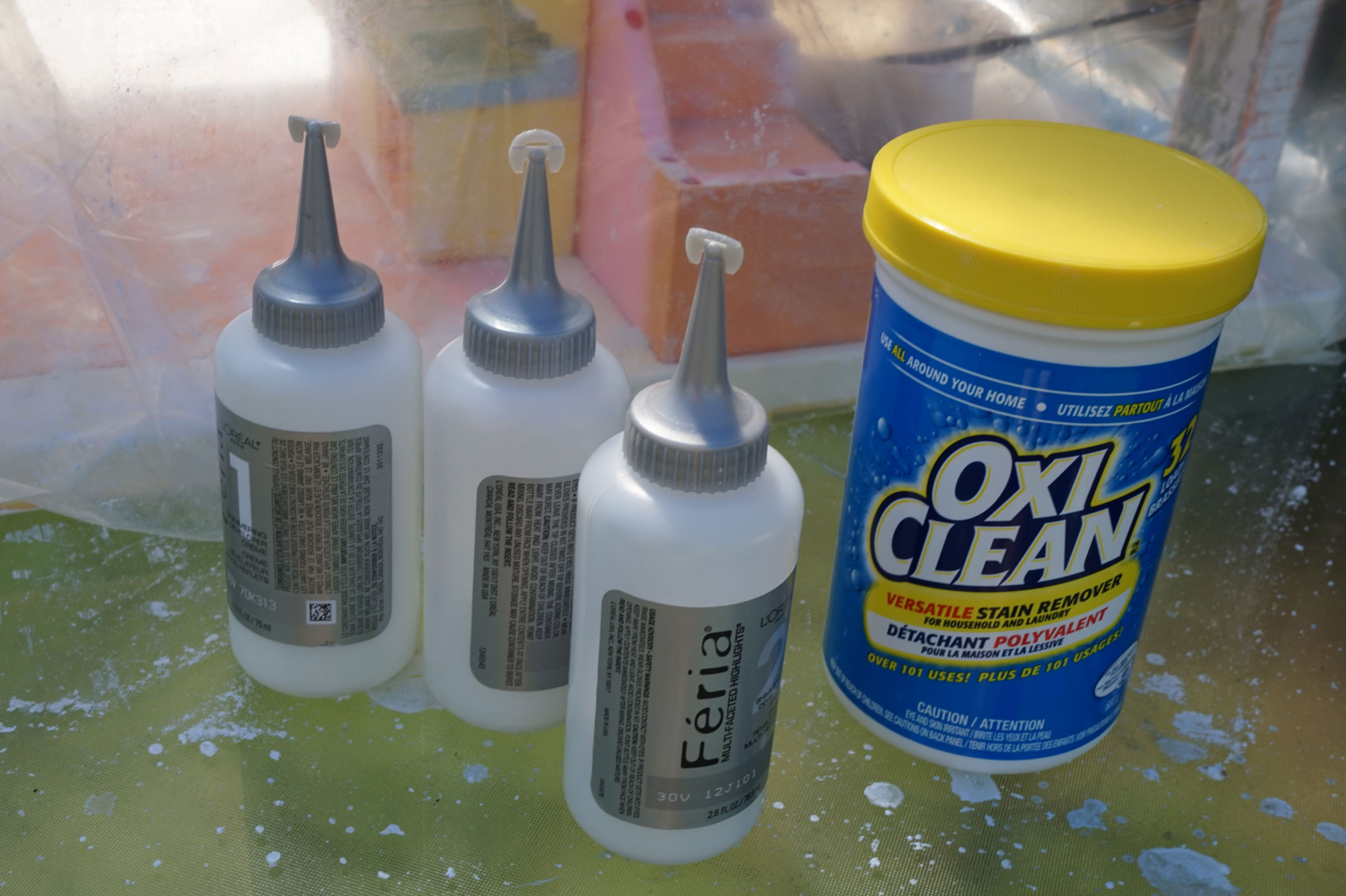
How to Bleach Whiten Yellow Plastic Toys
If the bleaching solution is too thick in certain areas, those spots will whiten faster. It’s essential to apply an even coat. One of my featured projects involved restoring a Playskool Victorian Dollhouse.
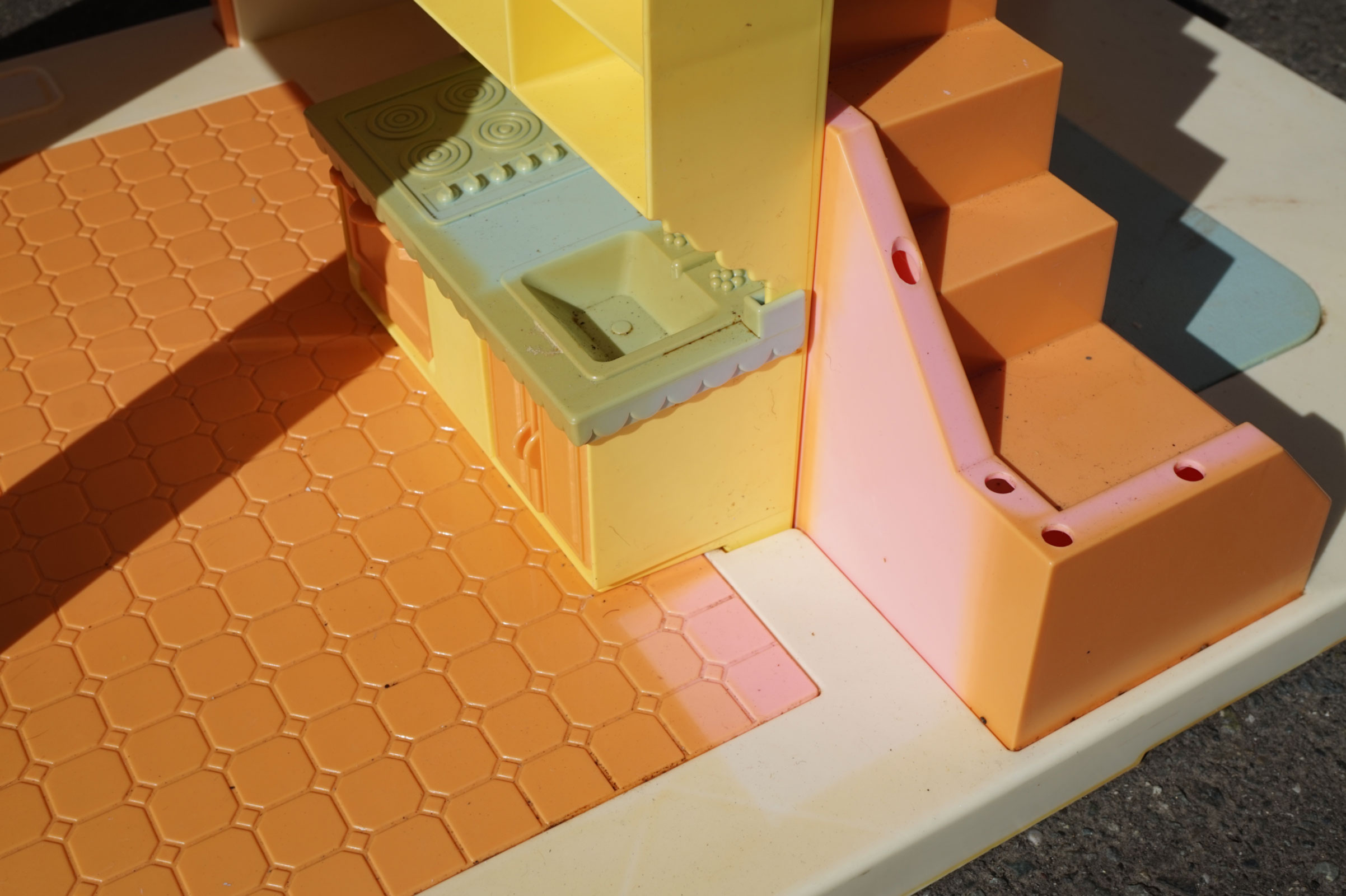
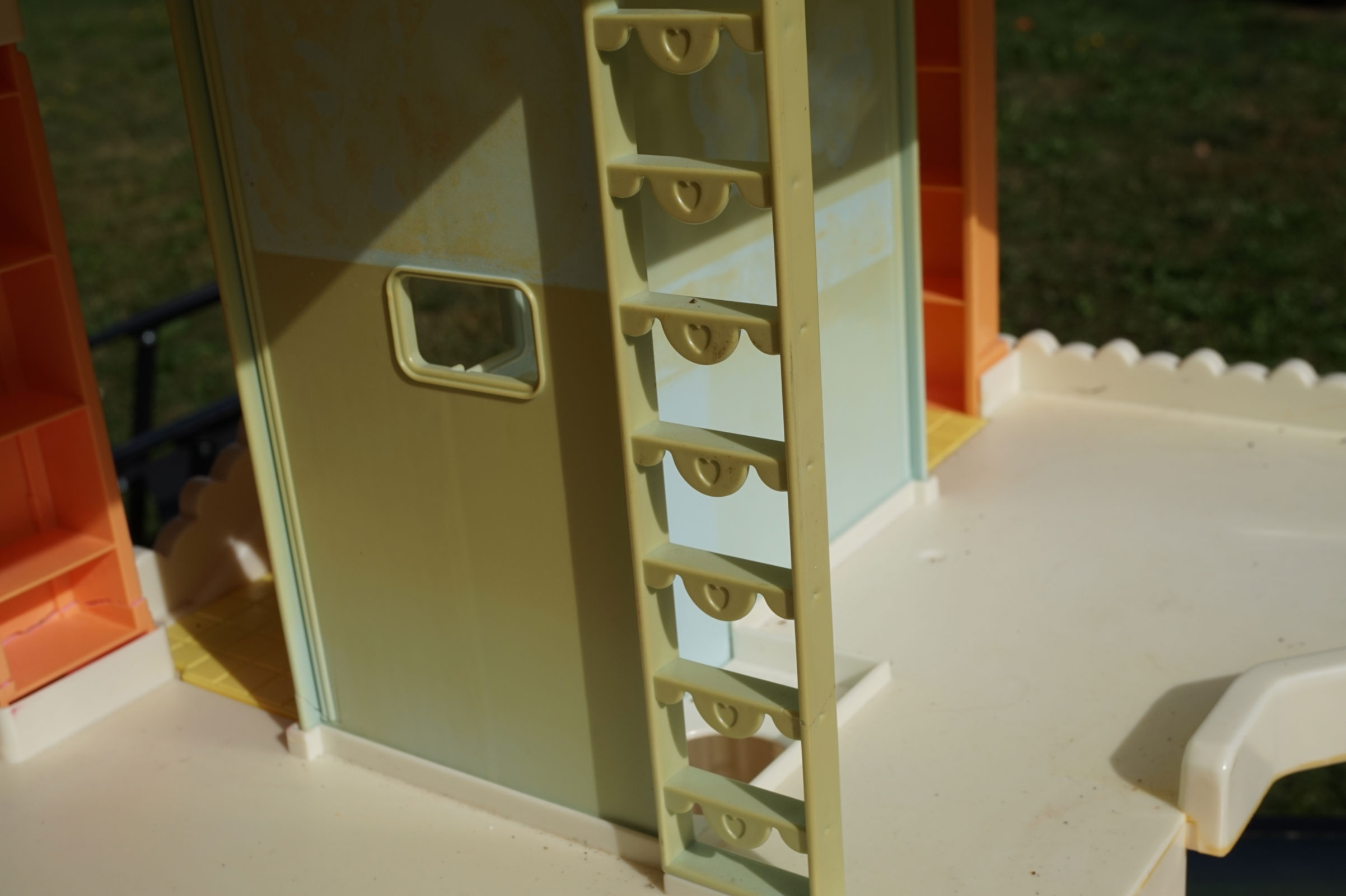
I used a hair-color brush to apply the bleach as evenly as possible, avoiding areas that weren’t yellowed.
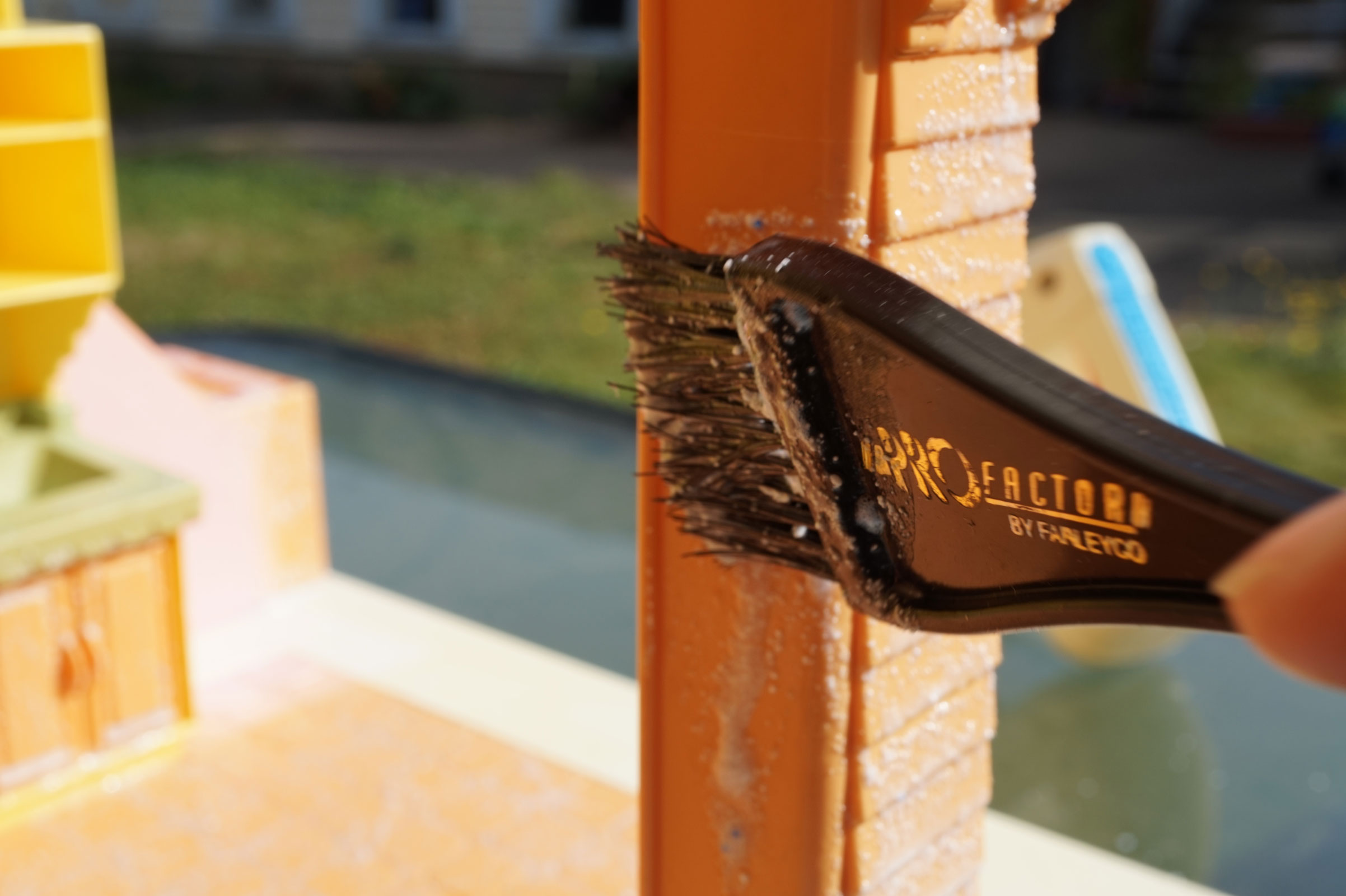
Next, I placed the dollhouse inside a clear plastic recycling bag and monitored it closely throughout the day, ensuring it stayed wet and was exposed to direct sunlight.
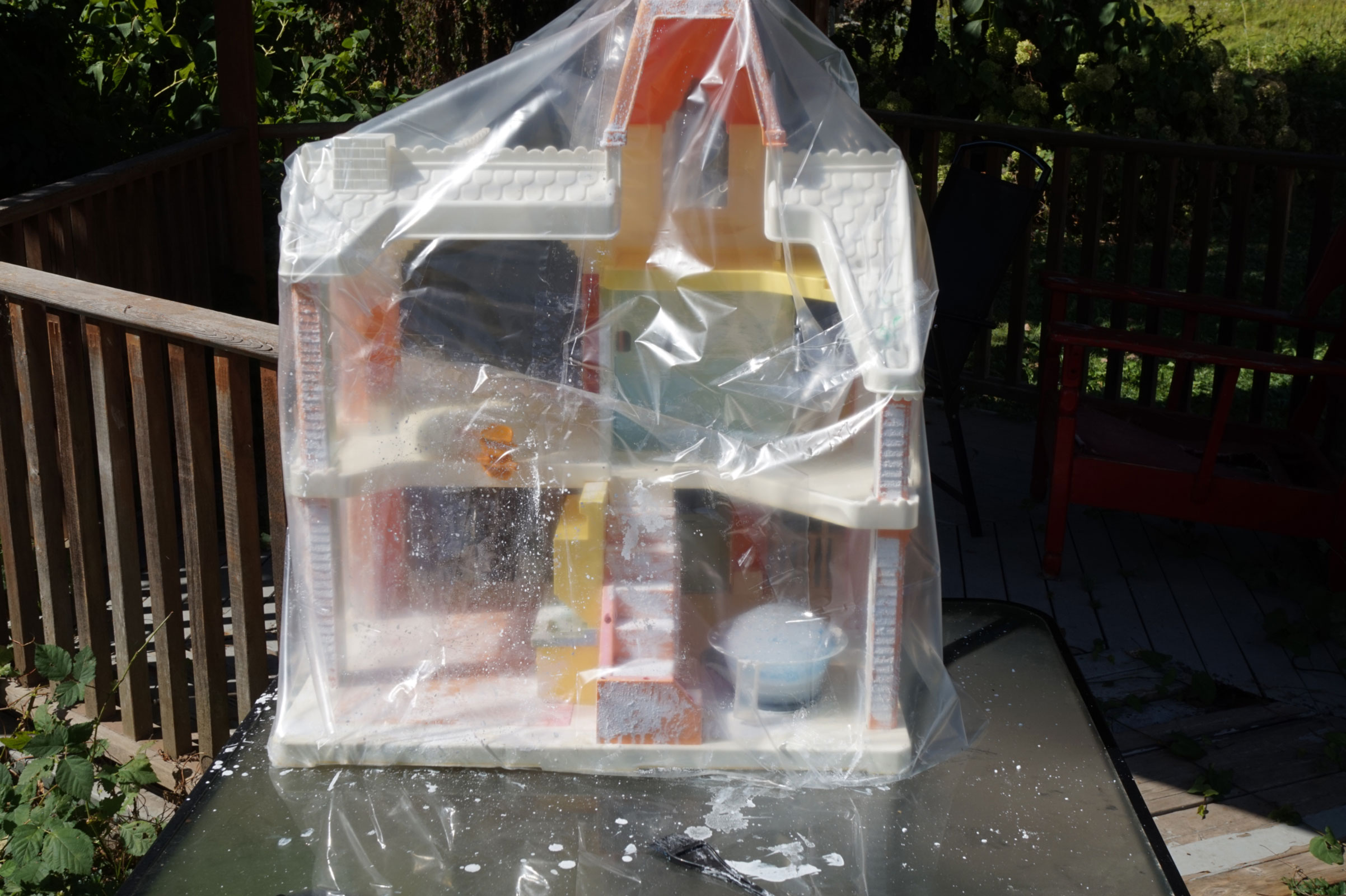
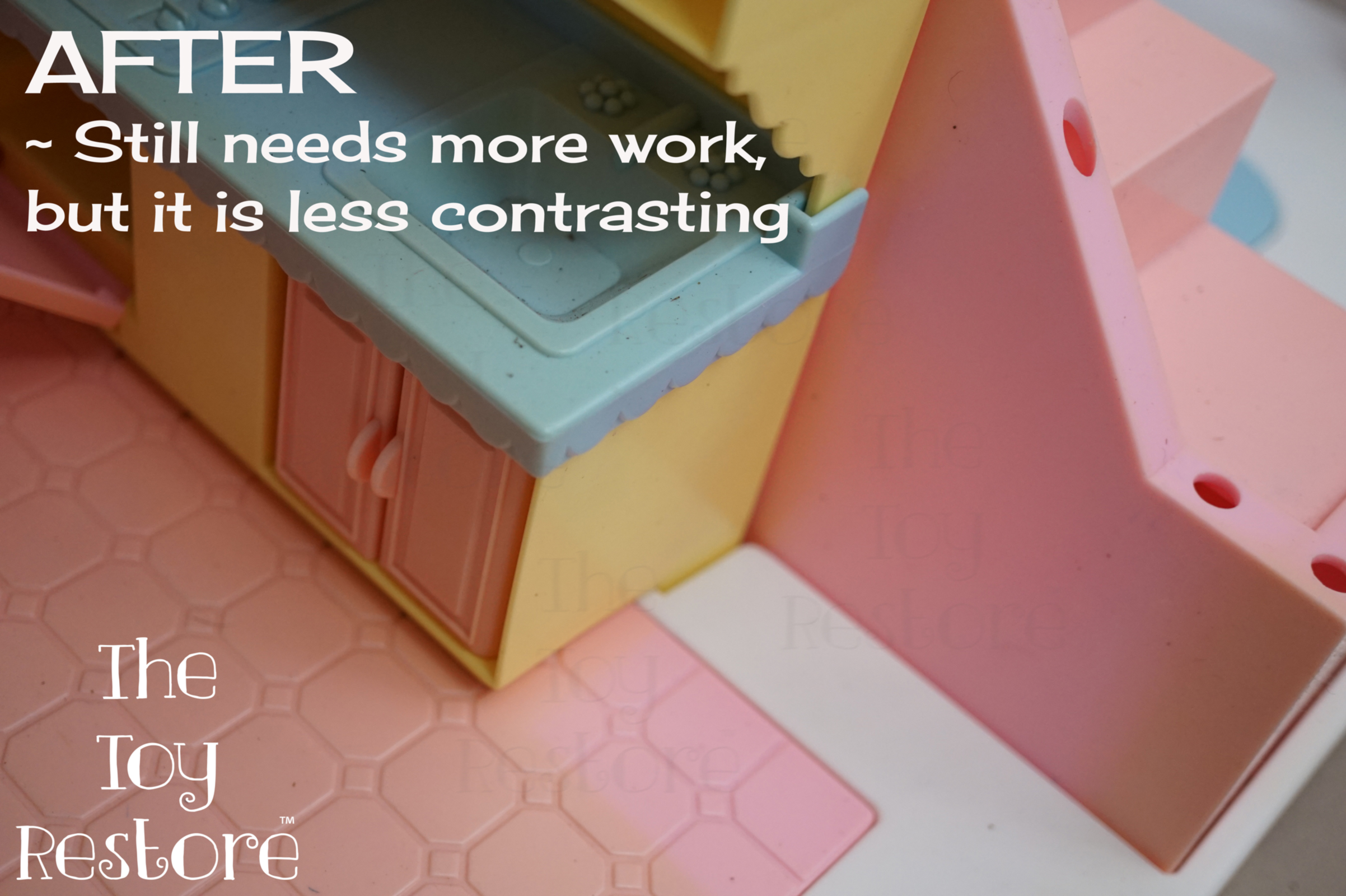
However, I noticed the yellowing didn’t lift evenly. It would have been better to disassemble the dollhouse and bleach each piece separately, but I didn’t have 60 hours to dedicate to that. I do have a greenhouse, so I cleaned off the bleach and let the toy dry. There were still blotchy areas of discoloration, but at that point, I chose to slow the process down. I left the dollhouse in the greenhouse for about a month, rotating it as needed to avoid over-bleaching. Eventually, the color evened out, though it wasn’t perfect.
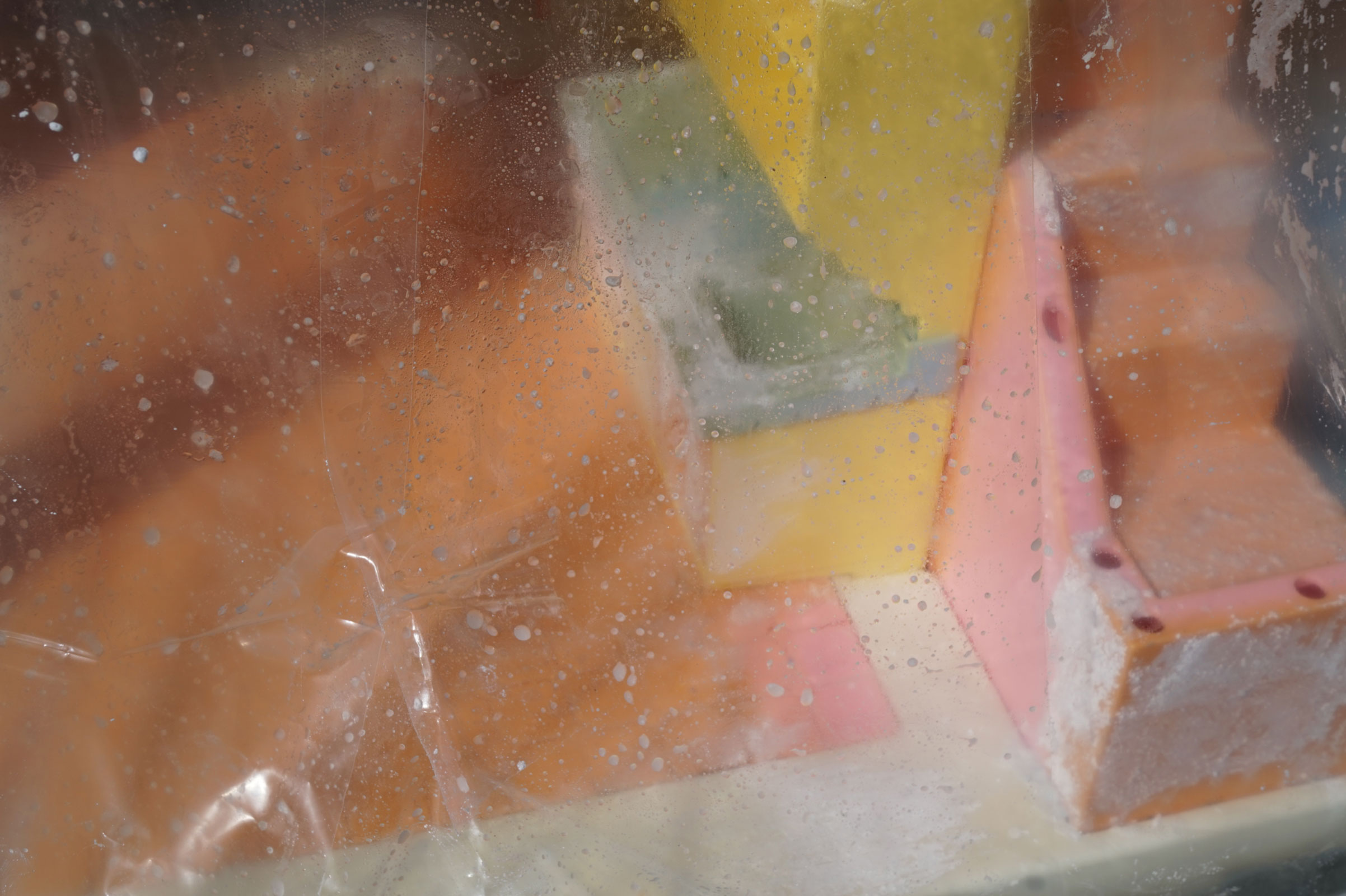
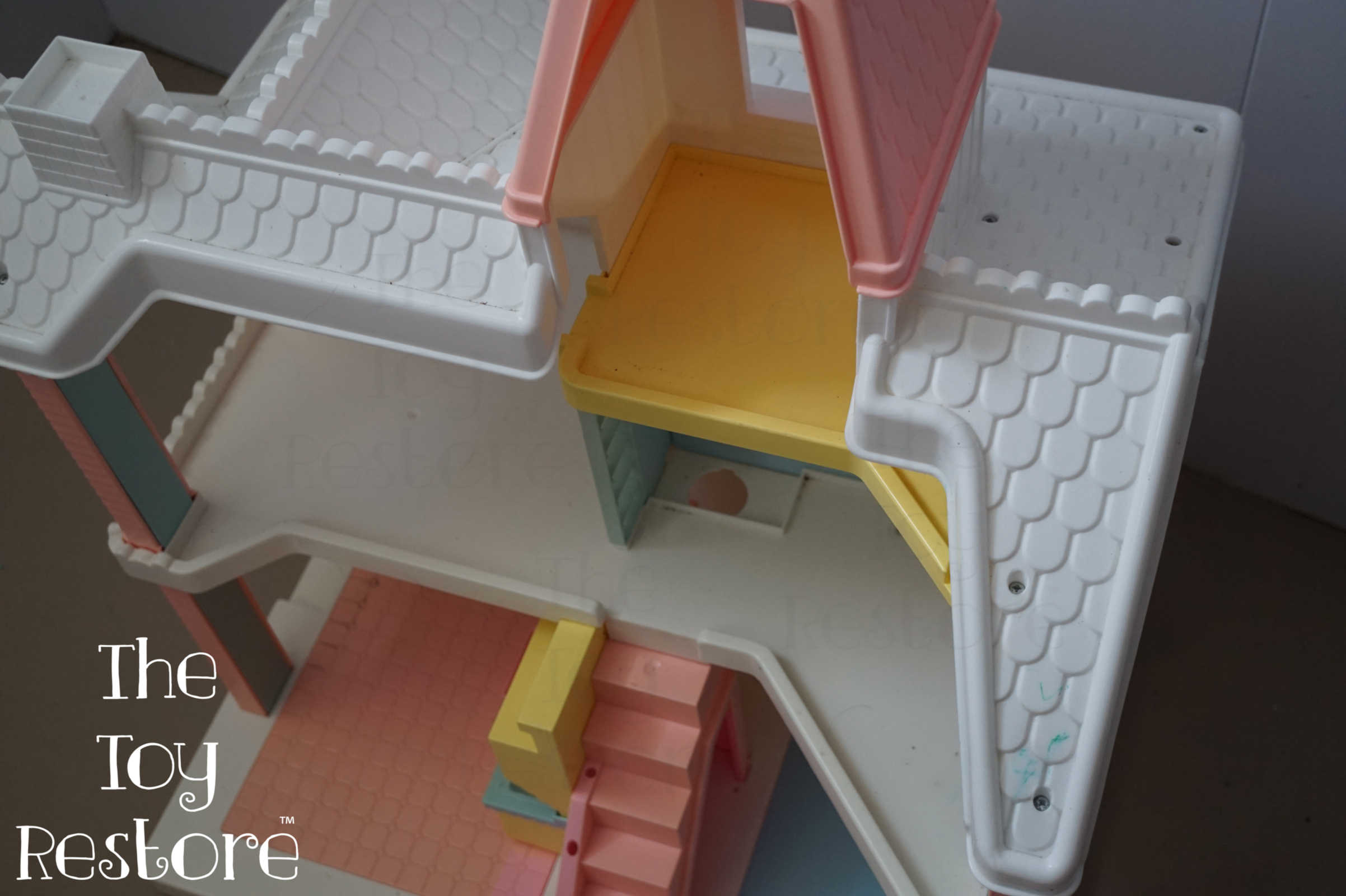
Eventually, the color, including the blotches evened out as best as it could. There is still a lot more work needed on this dollhouse, but I am too afraid to continue with bleaching it. The plastic has already become brittle.
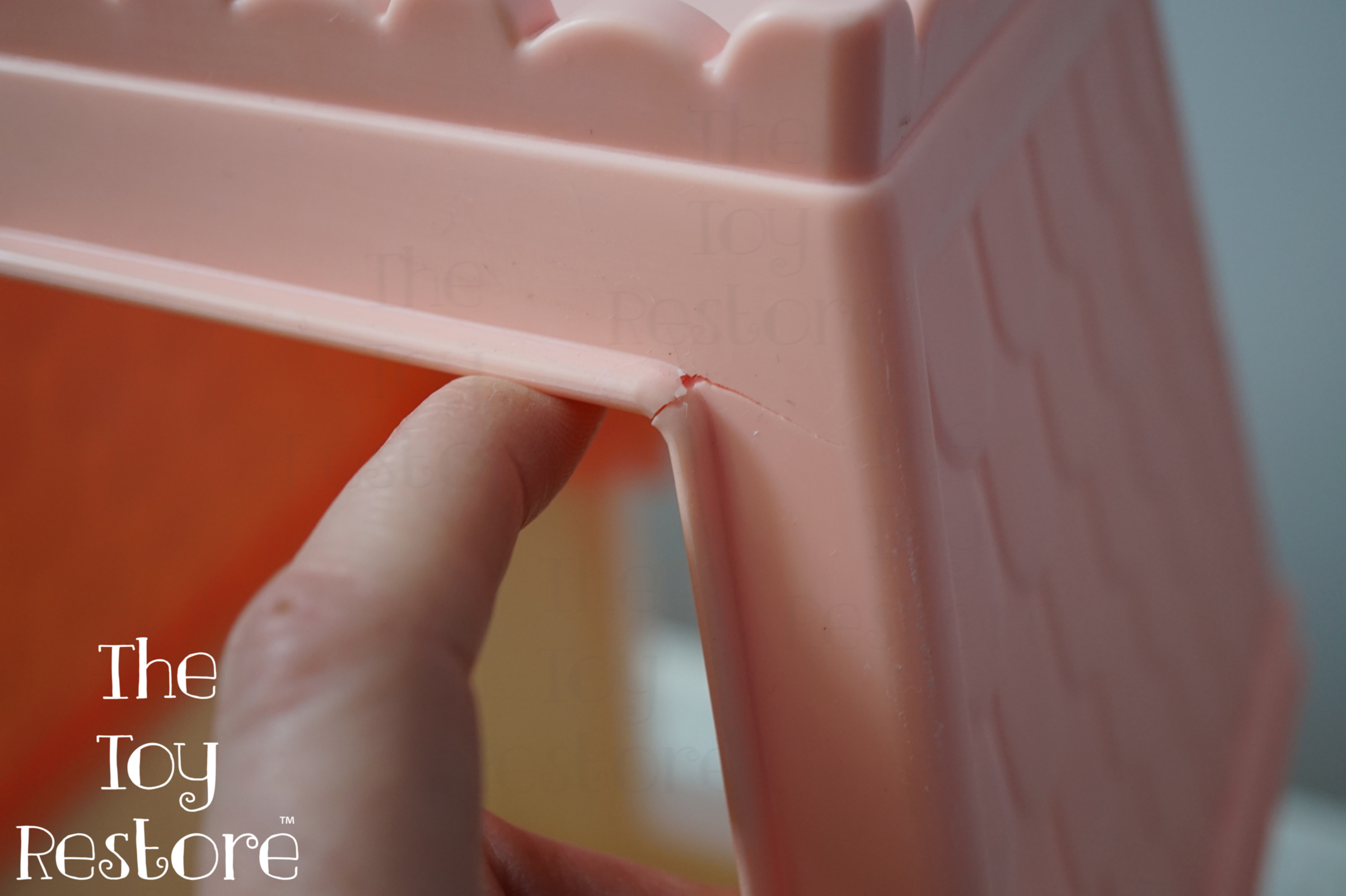
While the dollhouse still needs work, I’m hesitant to continue because the plastic has already become brittle.
How to Whiten Yellowed Plastic Toys: Fisher Price Examples
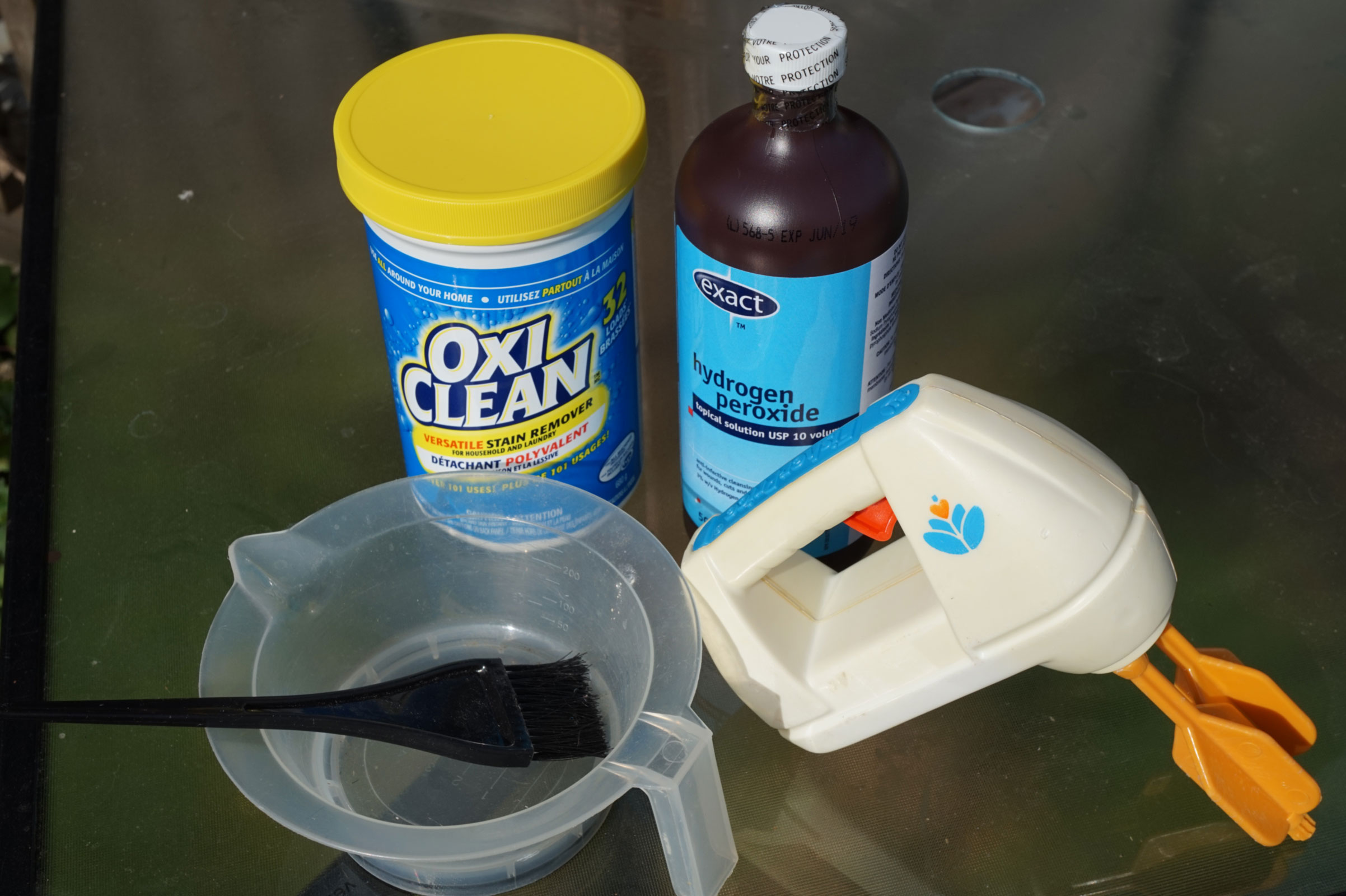
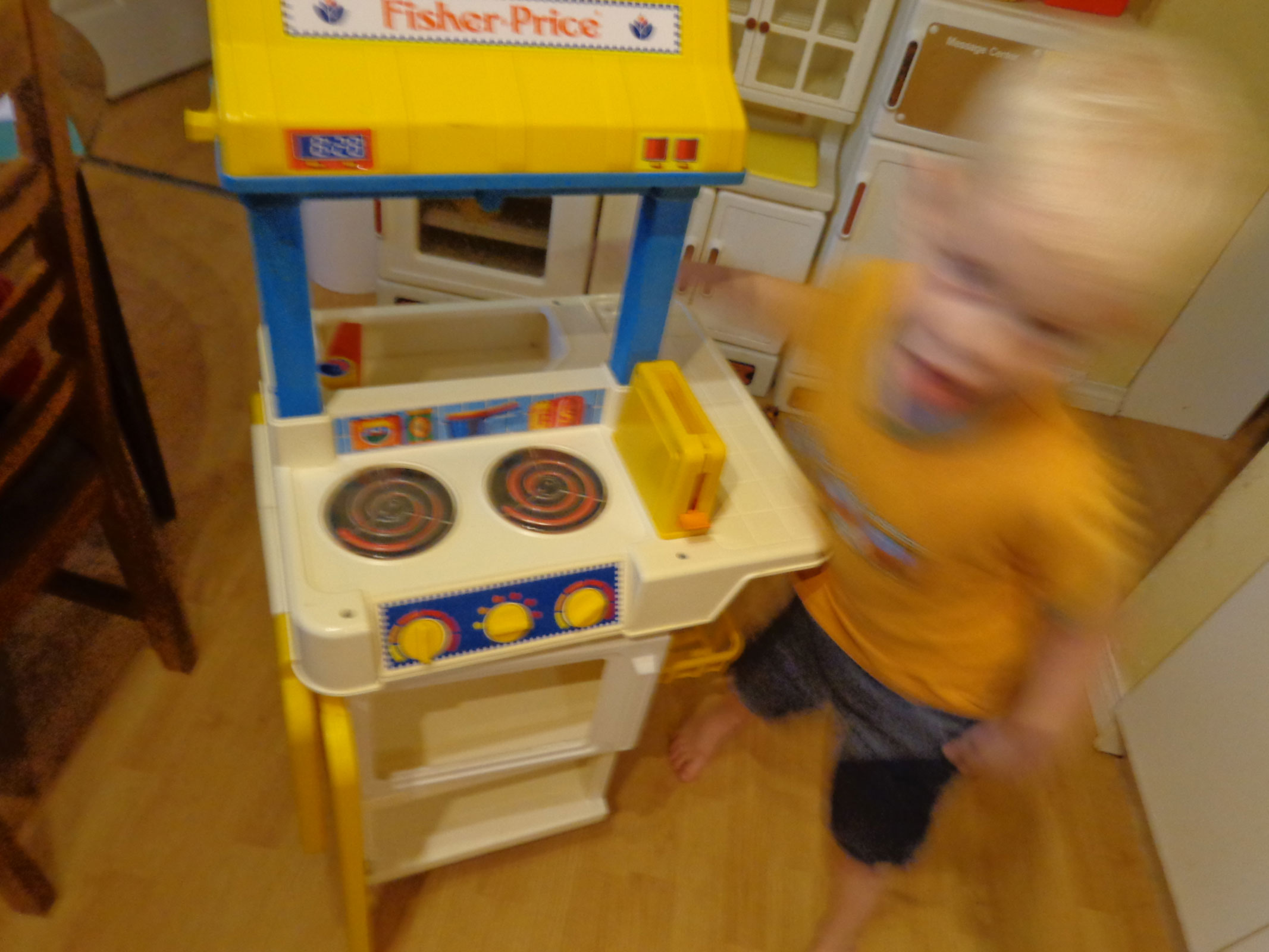
I’ve also used this whitening process on various Fisher Price Fun with Food toys. Sunlight alone does a decent job, but adding bleach and hydrogen peroxide speeds up the process. I make sure to apply the solution only to the white areas and monitor it closely to avoid blotchiness.
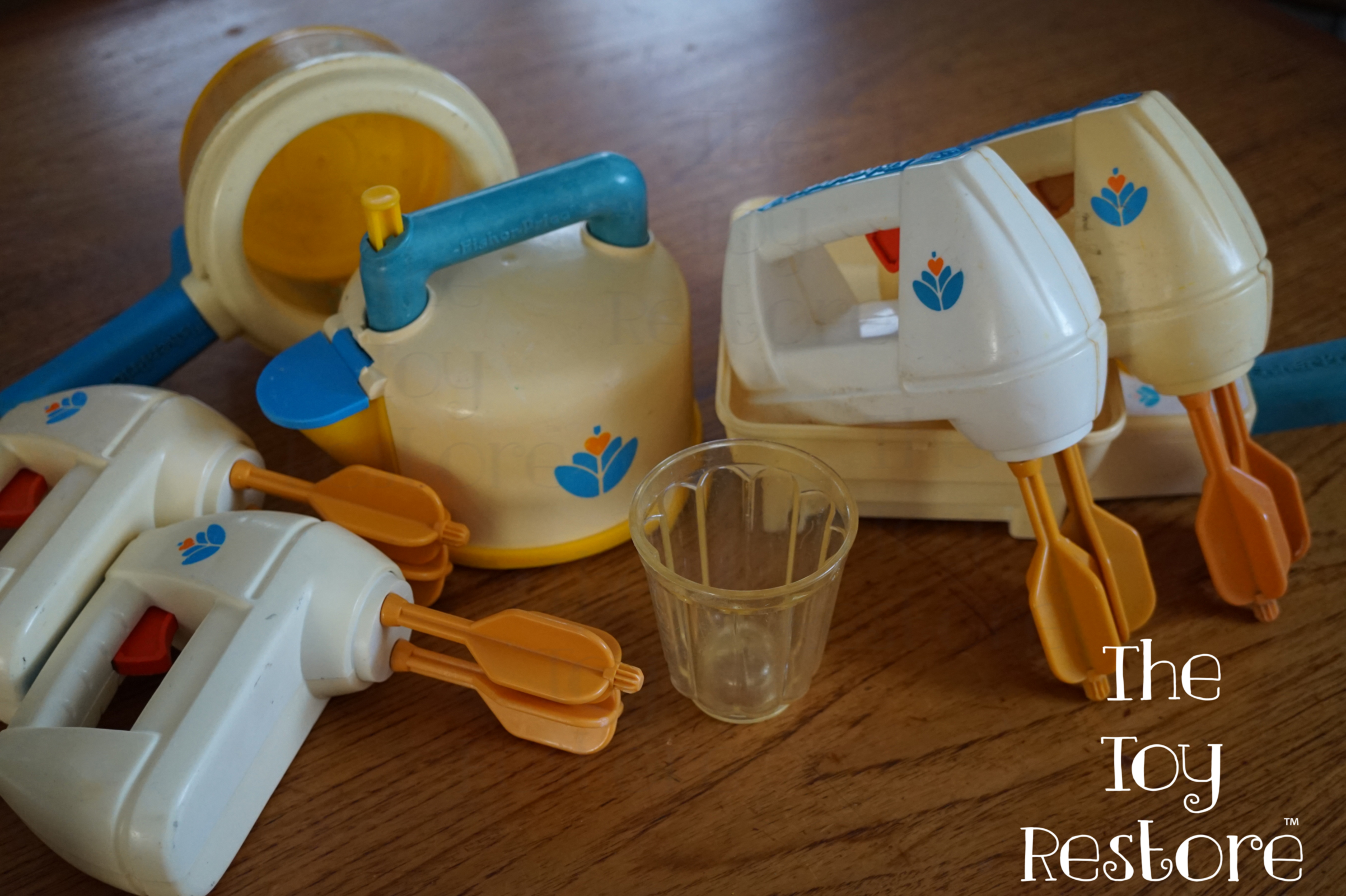
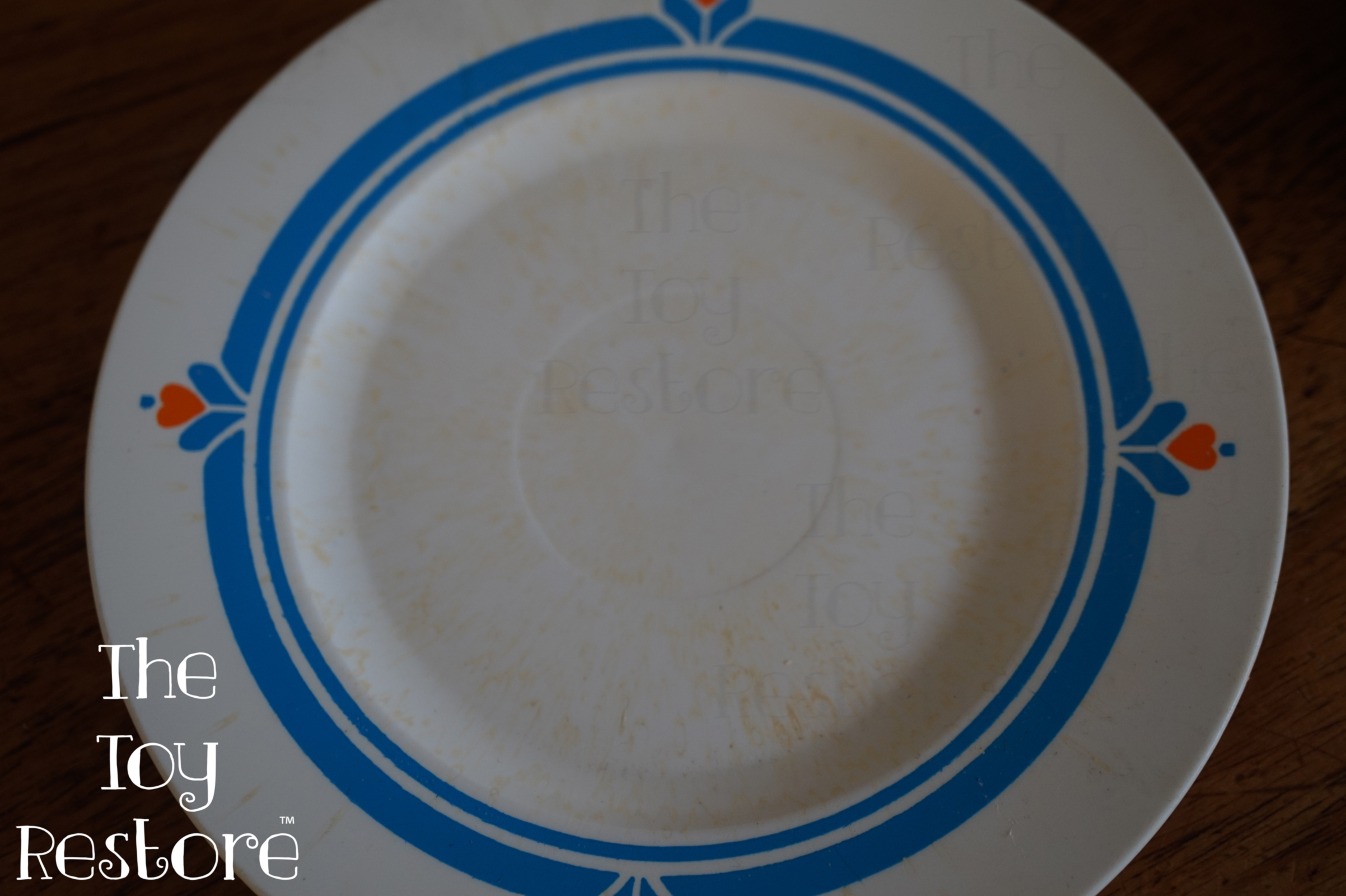
One such instance involved a Fisher Price Fun with Food dish that became blotchy because I didn’t apply an even coat of bleach.
Sunlight Also Removes Marker Stains
I’ve found that sunlight is great for removing marker and pen stains from plastic furniture items for kids, which I often find at thrift stores. A simple exposure to sunlight is usually enough to remove these stains, depending on the season.
Does the Time of Year Matter for Sunlight Whitening?
In Canada, we experience stronger sunlight and longer daylight hours during the summer months (July and August). This heat speeds up the chemical reaction, making it the ideal time for whitening toys.
Can You Overdo It? Yes, Color Can Fade.
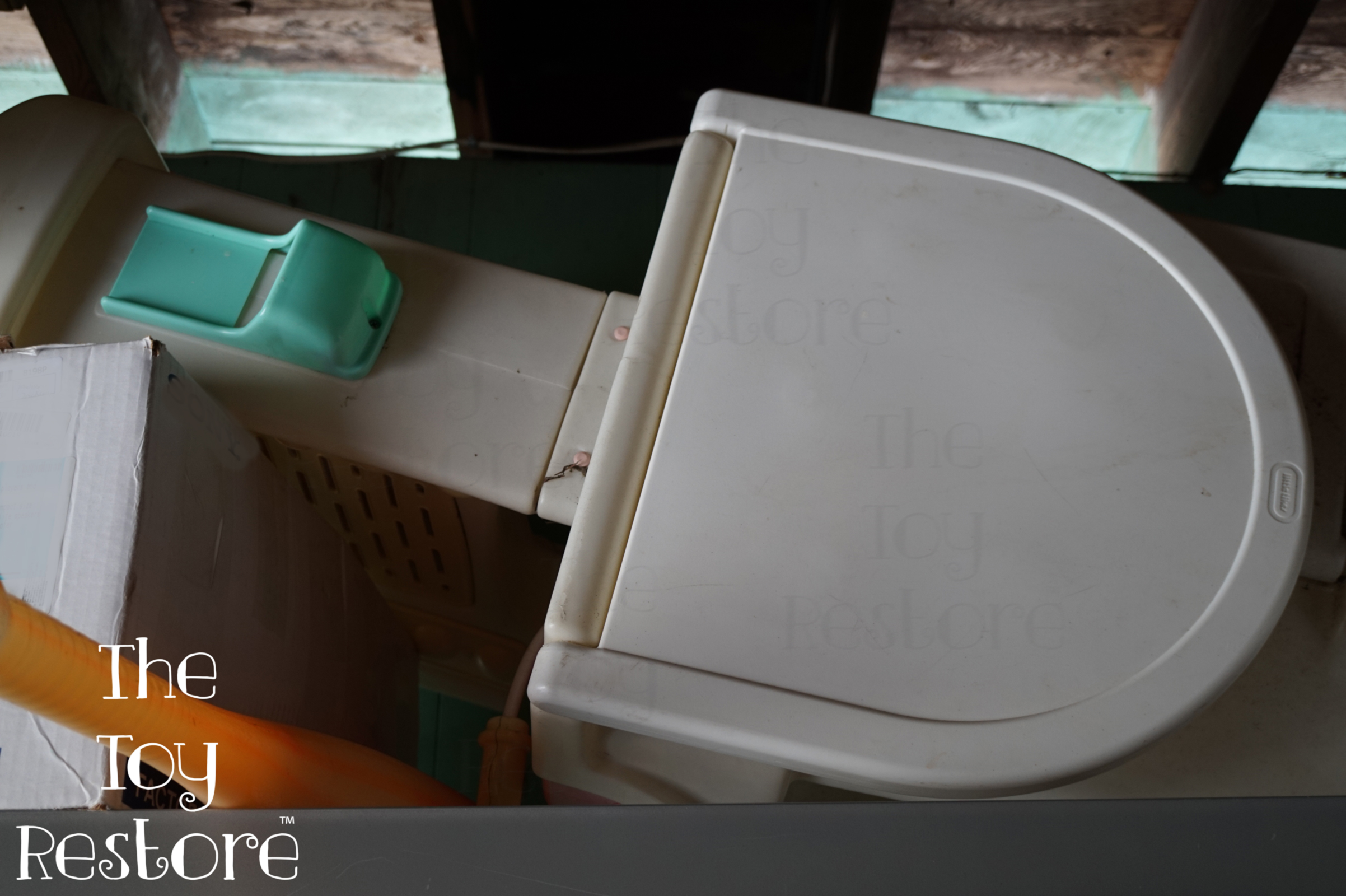
Yes, over-bleaching is a real concern. Colors like pink and purple fade quickly, while red will turn into a dull pink. I learned this the hard way when I left a Vintage Little Tikes Beauty Salon outside in the shade for about six months. It turned white, even though it had been kept in a shaded spot.
Yes, Plastic Can Become Brittle!
I once tried to whiten some clear Fisher Price Fun with Food glasses, but I got distracted and forgot about them. When I returned, they had become brittle and crumbled along the edges. This is a prime example of over-bleaching.
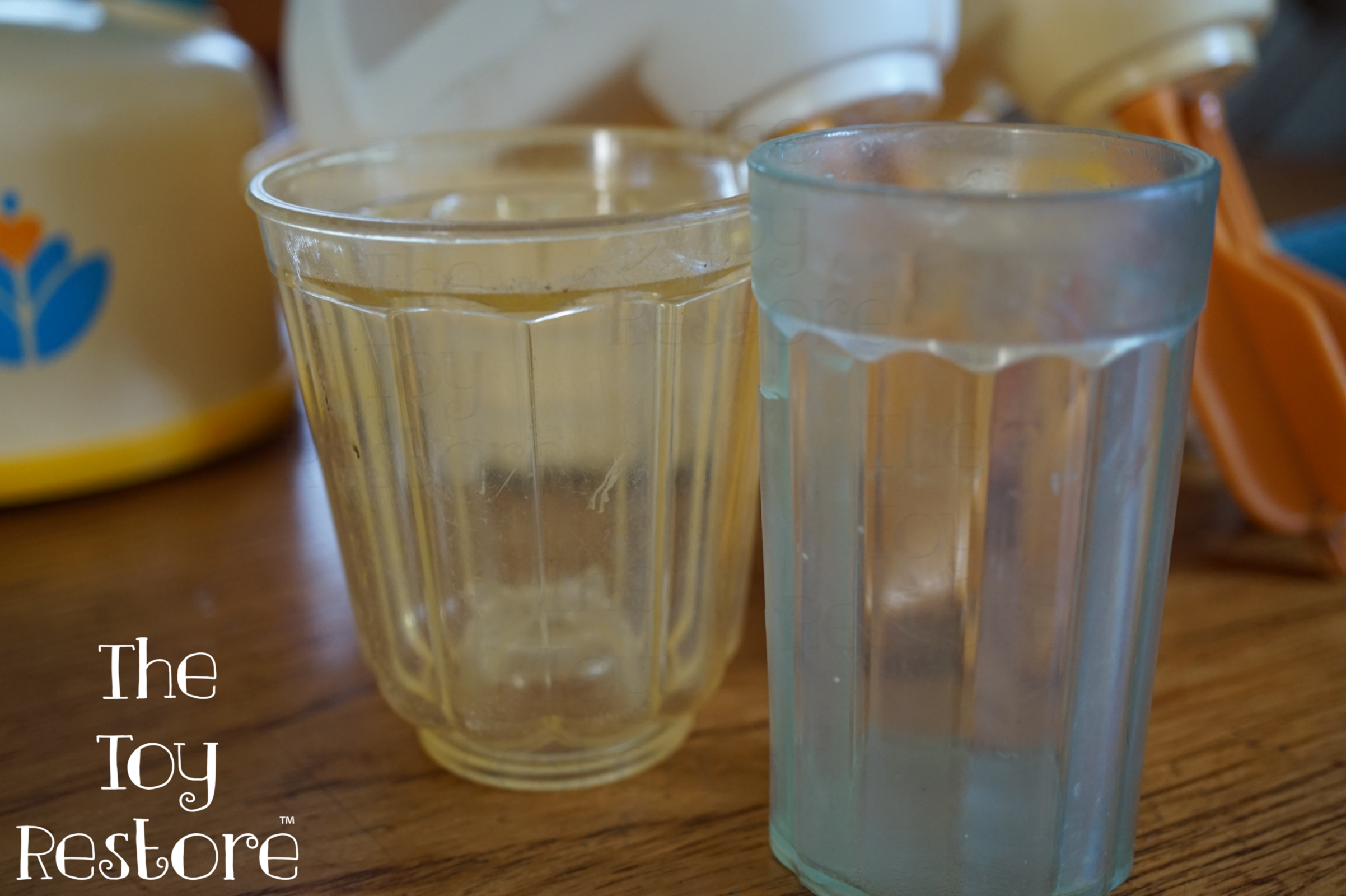
The reason for this is that when you bleach plastic, you’re removing the bromine from the surface. Without the bromine, the plastic becomes much less flexible and more prone to cracking.
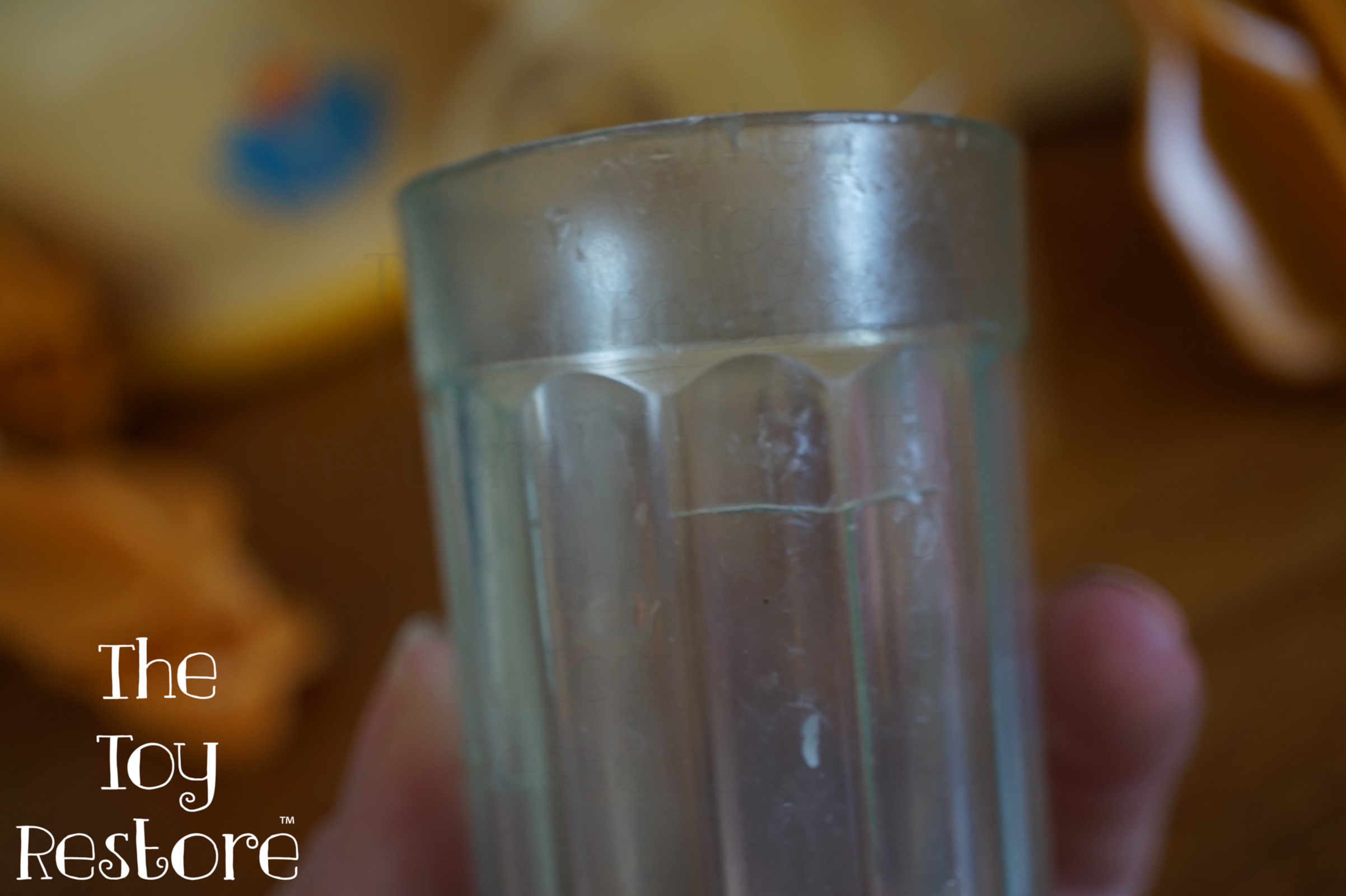
Similarly, vintage Little Tikes play kitchen knobs can become brittle if left outside for too long. So, if you have to remove parts from vintage toys, be extra cautious.
What Happens to Colored Plastic When You Overdo It?
Colored plastic can fade to white if over-bleached. In cases where the bleach isn’t applied evenly, it can turn blotchy. I made this mistake with a Fisher Price Fun with Food cupcake tray, which ended up turning white and blotchy because I left it in the solution too long.
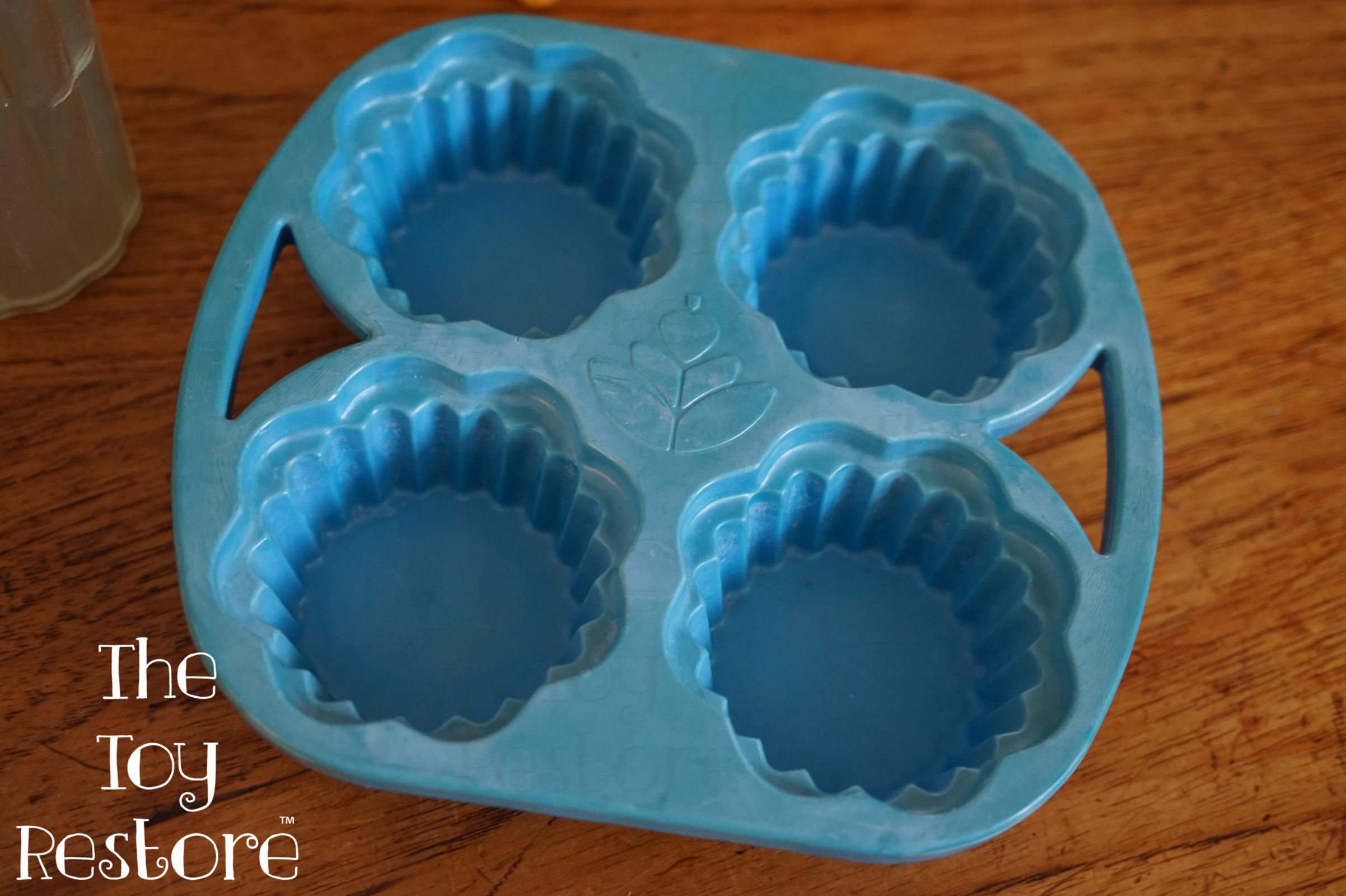
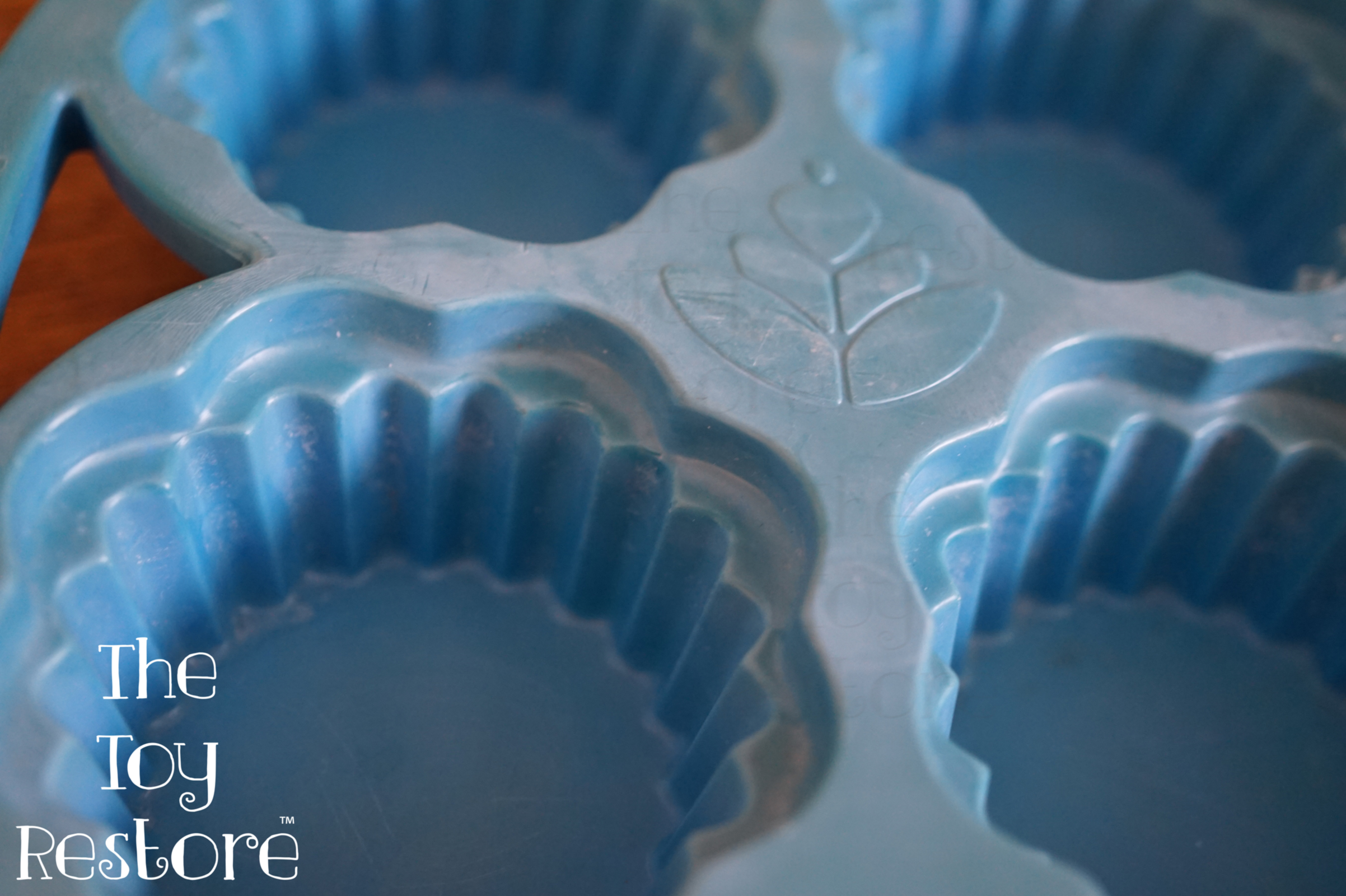
While I’ve shown mostly mistakes in this post, I’ve had plenty of successful projects too. Sometimes learning from mistakes is the best way to improve. I hope my experiences help others avoid similar pitfalls.
I’m not a chemist, so if you notice any errors in my explanation, feel free to reach out and let me know!
Conclusion: Keep Experimenting and Be Careful
Restoring yellowed plastic toys can be a fun and rewarding process, but it’s important to proceed cautiously and carefully monitor your progress. The key takeaway is to avoid overdoing it and to always test a small area first. With time, patience, and the right techniques, you can bring those vintage toys back to life.
Can I use it on toys that having some paint?
For whitening, toys that have paint would most likely lose the paint at the same time. For me, if it were my toy, I would just put it out in the sunlight and watch it. No chemicals. I really don’t use chemicals at all anymore because the plastic really degrades, and becomes fragile. Sunlight does the same thing, but it is slow, which give you time to decide when to bring it in the house. This dollhouse I left outside in my greenhouse for a month, after the chemicals didn’t work right.